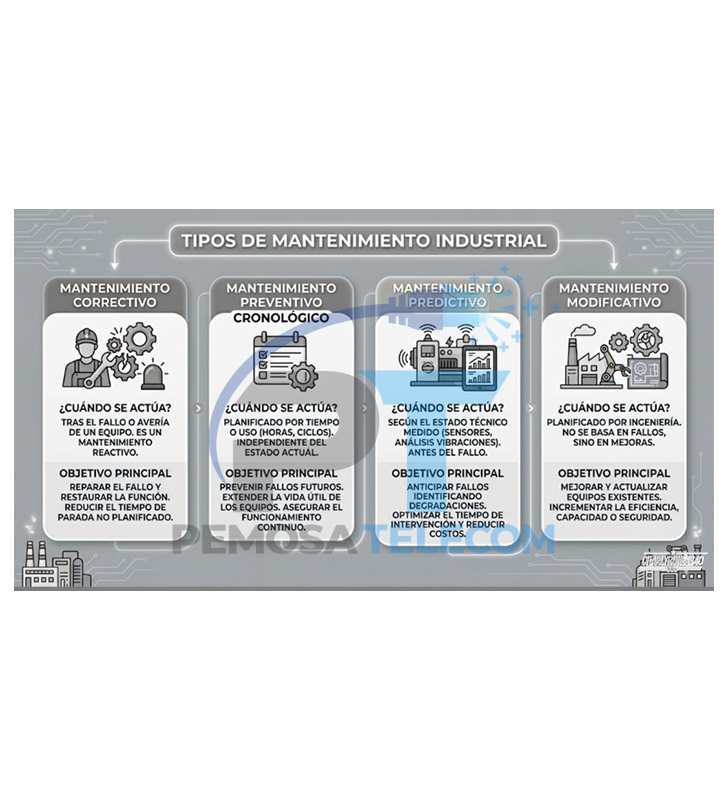
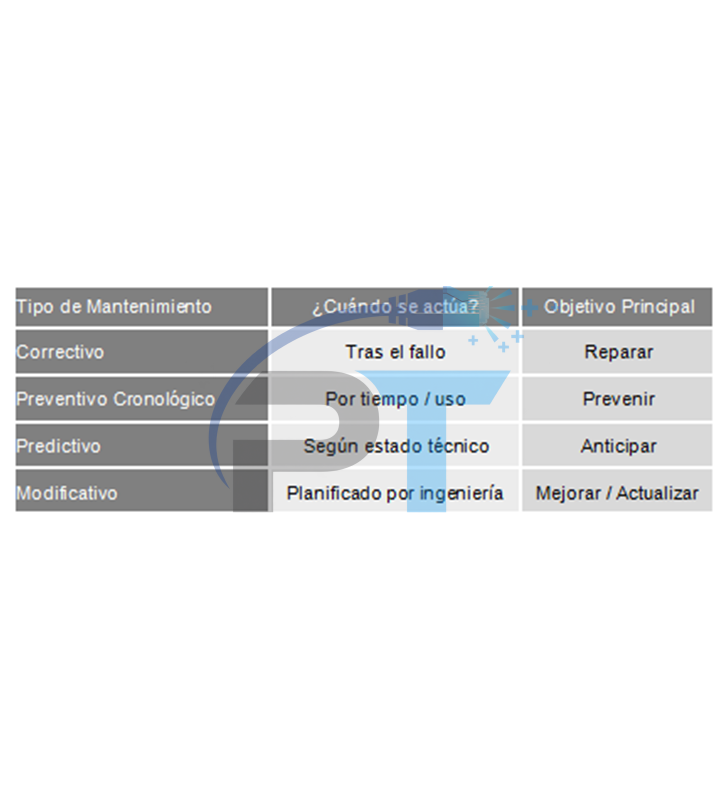
In the industrial and asset management sectors, there are primarily three main maintenance categories, which are further divided into several subcategories depending on the timing and strategy used.
Below, I detail the main types of maintenance:
1. Corrective Maintenance: ------------------------------------------ This type of maintenance is performed after a failure or breakdown occurs. Its objective is to repair the equipment so that it returns to operational status.
Immediate (or Emergency): Urgent action is taken as soon as the breakdown occurs to avoid costly production stoppages or safety risks.
Deferred (or Scheduled): The failure is not critical. The breakdown is detected, but the repair is postponed and scheduled for a mo[...]
In the industrial and asset management sectors, there are primarily three main maintenance categories, which are further divided into several subcategories depending on the timing and strategy used.
Below, I detail the main types of maintenance:
1. Corrective Maintenance: ------------------------------------------ This type of maintenance is performed after a failure or breakdown occurs. Its objective is to repair the equipment so that it returns to operational status.
Immediate (or Emergency): Urgent action is taken as soon as the breakdown occurs to avoid costly production stoppages or safety risks.
Deferred (or Scheduled): The failure is not critical. The breakdown is detected, but the repair is postponed and scheduled for a more opportune time (for example, a weekend or a shift change).
2. Preventive Maintenance: ----------------------------------------- This type of maintenance is performed before a failure occurs. Its objective is to reduce the probability of breakdowns and maintain equipment in optimal condition through planned tasks.
Scheduled (or Chronological): This is based on time or usage. Inspections, cleanings, or parts replacements are performed according to a calendar (e.g., monthly) or based on operating hours (e.g., every 5,000 hours), regardless of the actual condition of the part.
Predictive (Condition-Based): This is performed through the constant monitoring of physical variables (temperature, vibration, oil analysis, ultrasound). Intervention only occurs when data indicates that a part is about to fail.
Opportunistic: This takes advantage of periods of plant downtime or low activity (such as vacations or maintenance on other lines) to perform inspections, even if they are not yet scheduled.
3. Modificative Maintenance: ------------------------------------------- This does not aim to repair or prevent wear, but rather to improve the original design or characteristics of the equipment.
Upgrade (or Evolutionary): Technologically obsolete components are replaced with more modern ones to improve performance, efficiency, or safety.
Hardening/Overhaul: This involves completely disassembling the equipment to restore it to "zero hours," leaving it practically like new.
Un ATS (Automatic Transfer Switch), o Interruptor de Transferencia Automática, es un dispositivo electromecánico inteligente que actúa como un "árbitro" o vigilante del suministro eléctrico de una instalación.
Su función principal es conmutar de forma automática la energía de la carga (tus equipos, servidores o toda una planta) entre dos fuentes de alimentación diferentes: la red eléctrica principal y una fuente de respaldo (generalmente un grupo electrógeno/generador o un sistema de baterías/UPS).
Un ATS (Automatic Transfer Switch), o Interruptor de Transferencia Automática, es un dispositivo electromecánico inteligente que actúa como un "árbitro" o vigilante del suministro eléctrico de una instalación.
Su función principal es conmutar de forma autom[...]
Handling and Delivery Service charged by our manufacturer upon delivery of the goods to our warehouse.
When we talk about "Transport and Reception of Goods from the Manufacturer (Shipping Costs)," we are referring to the logistical process of moving products from where they are manufactured to the delivery point, and who assumes responsibility and the cost of that journey.
The Concept of "Shipping Costs" In logistics, the term shipping costs simply refers to the price or invoice for the transport. Depending on who pays for the shipment, there are two main options that you will see on any invoice or delivery note:
Shipping Prepaid: The manufacturer (seller) covers the cost of transport. The product price usually already includes this service.
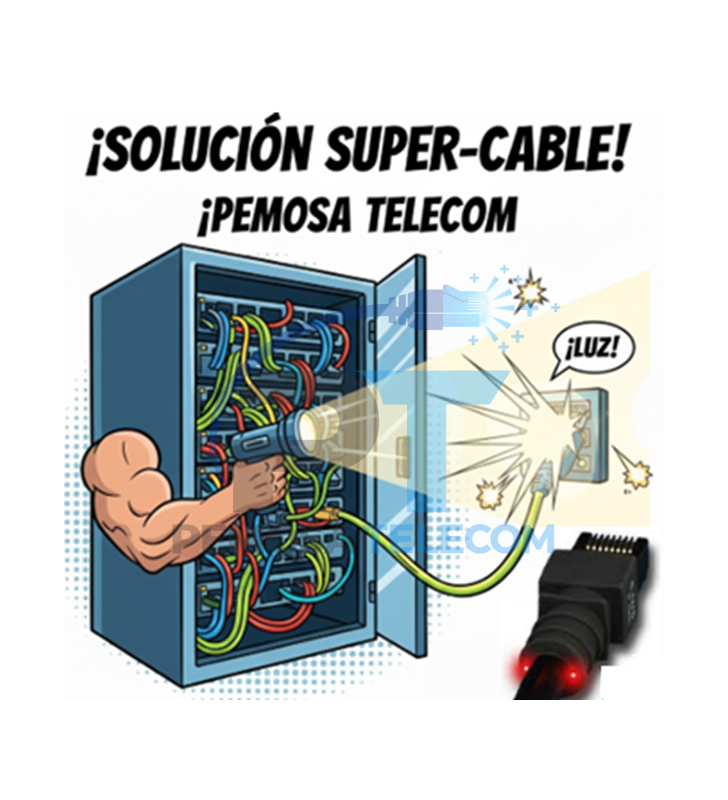
Technical Report: Infrastructure Optimization with Smart Light-Emitting Patch Technology 1. Introduction In high-density environments, such as the 19" racks we manage at Pemosa Telecom, connection identification is one of the biggest challenges for maintenance technicians. Conventional patch cables require manual tracing, which carries the risk of accidental disconnection and wasted time. Smart Patch Cables solve this problem with a patented identification system using plastic optical fiber or integrated copper connections.
2. Key Operational Advantages A. Instant Visual Identification (Light System) Unlike conventional labels that can fade or become hidden in a cable bundle, Smart Patch Cables use two strands of plastic optical fiber or two copper cont[...]
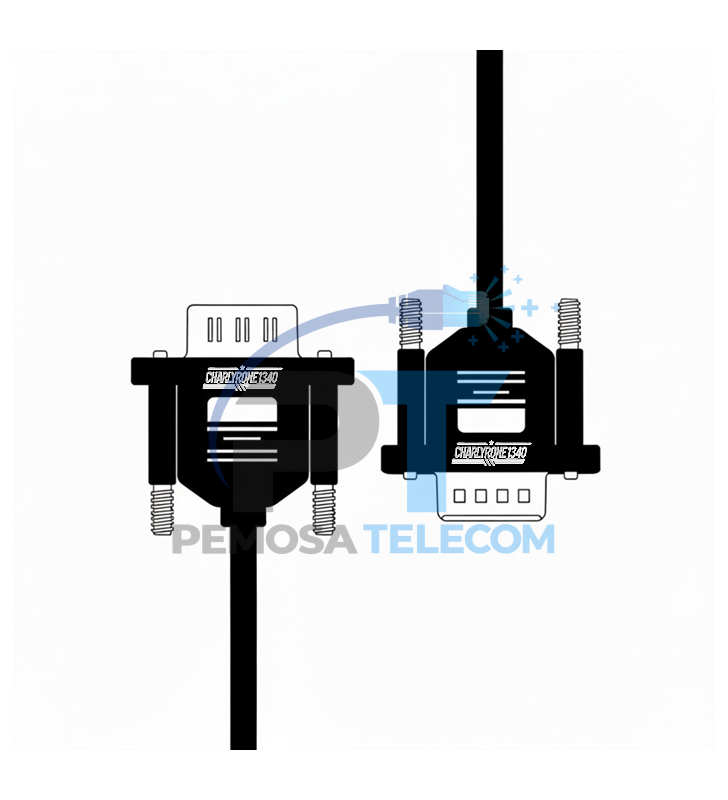
Super Video Graphics Array (SVGA), Super VGA, or D-sub-15 is a term that encompasses a wide range of computer graphics display standards, including video cards and monitors.
In 1987, when IBM released the VGA standard, many manufacturers produced VGA clone cards. IBM then created the XGA standard, which was not adopted by other companies that began producing SVGA graphics cards.
The new SVGA cards from different manufacturers were not exactly the same at the hardware level, making them incompatible. Programs had two options: manage the video card through standard calls, which was very slow but offered compatibility with different cards; or manage the card directly, which was very fast and allowed access to all its functionality (graphics modes, etc.). However, t[...]
CCTV Cameras: Camera Ecosystem - Physical Formats and Main Applications. Identifying models based on their deterrent capacity, mobility, and viewing range.
CCTV Format Classification. Representation of the main camera shapes according to their environment and function: from the discreetness of the Dome to the 360° coverage of the Fisheye.
Capture Types: Visual guide to physical devices. Each format (Dome, Bullet, Turret, PT, PTZ, and Fisheye) is designed to balance deterrence, durability, and coverage angle.
Dome: Designed for discretion and protection against tampering on interior ceilings. Bullet: Designed for visual deterrence and perimeter control outdoors. Turret: The standard for clarity, eliminating infrared reflections in mixed envir[...]
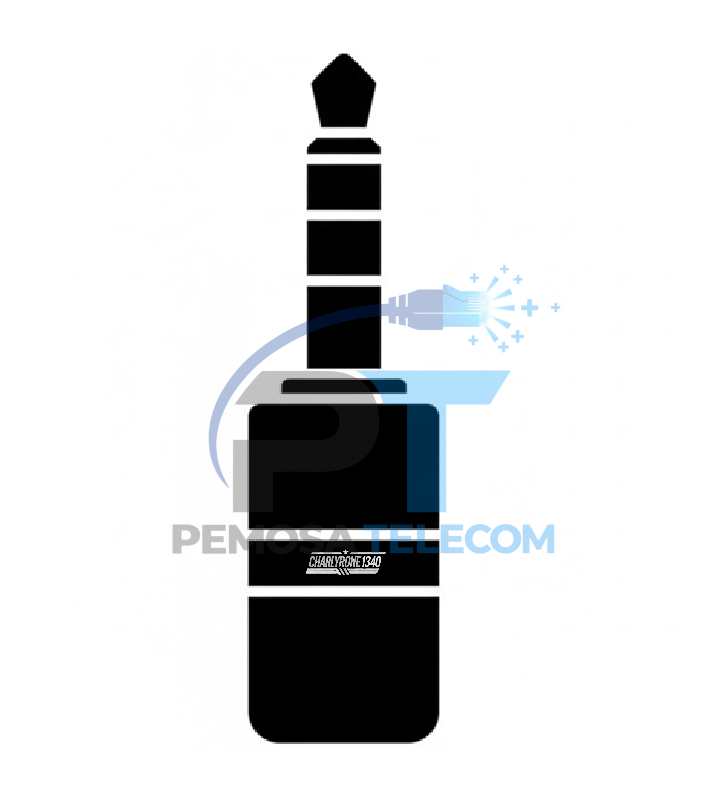
The 3.5mm connector transmits analog audio. It is classified by its rings into TS (mono), TRS (stereo), and TRRS (stereo plus microphone)—with the latter subdivided into CTIA or OMTP standards.
A 3.5mm jack (also known as a minijack, TRS/TRRS connector, or 1/8-inch connector) is a standard cylindrical connector used for transmitting analog audio signals.
Types based on the number of insulating rings
Black plastic rings separate the various metal contact sections (pins), determining their function:
TS (Tip, Sleeve – 1 black ring): Carries a monaural signal and ground. Common in musical instruments or simple microphones.
TRS (Tip, Ring, Sleeve – 2 black rings): Carries stereo sound (left channel, right channel, and ground). This is[...]
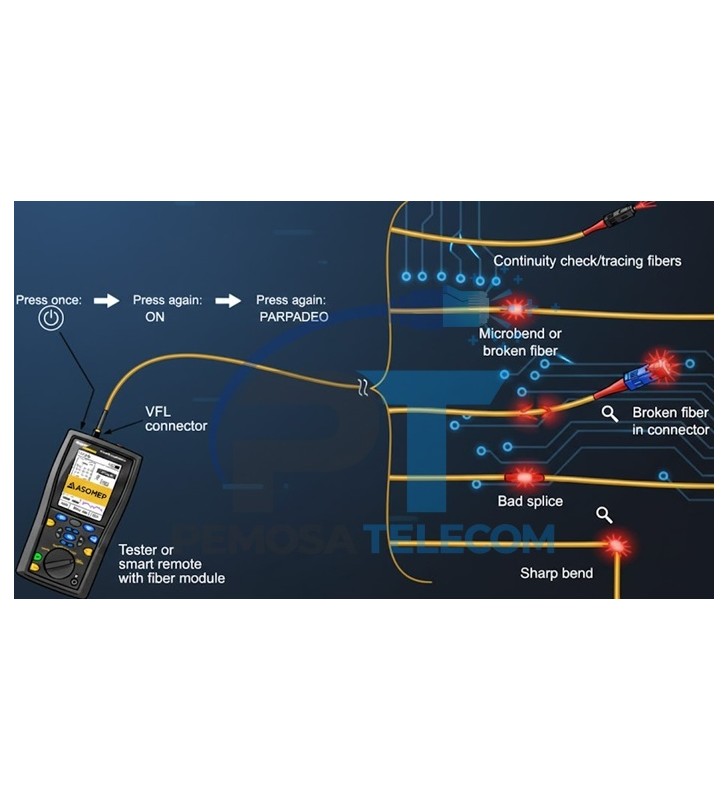
In the world of fiber optics, what we commonly call "light injectors" for inspection are mainly divided into two critical categories based on their function: those used to identify visual faults and those used to measure power losses.
1. Visual Fault Locator (VFL) This is the most basic and essential "injector." It uses a visible spectrum laser (generally 635-650 nm red light).
Function: It injects a powerful light that "escapes" from the fiber where there is a break, a macrobend (excessive bend), or a faulty splice. The technician will see a bright red dot through the cable jacket.
Types: * Pencil Type: Portable, for short distances (5-10 km).
Benchtop Type: For laboratory or high-power testing.
PUR (Polyurethane) Cable Jacket: The High-Strength Solution PUR (polyurethane) jacketing represents one of the most robust and advanced cable sheathing solutions, surpassing traditional materials like PVC in many aspects. Thanks to its exceptional mechanical and chemical properties, PUR-jacketed cables are the preferred choice in industrial environments, automation, and any application where strength and durability are critical.
PUR (Polyurethane) Cable Jackets: Maximum Strength for Demanding Applications
Cable jackets made of polyurethane (PUR) represent a high-performance and superior durability solution for industrial environments and mobile applications where cables are exposed to harsh conditions. PUR is not just a sheathing material; it's an investmen[...]
CR4 Steel (The Material) CR4 indicates a type of cold-rolled, deep-drawn quality carbon steel.
Properties: It is a very malleable and soft steel, allowing it to be bent, welded, and shaped into complex forms without cracking.
Surface: Because it is cold-rolled, it has a much smoother and more precise surface finish than hot-rolled steel.
2. Powder Coated (The Painting Process) This is electrostatic powder coating. Instead of applying liquid paint with a brush or spray, an electrically charged powder is sprayed onto the metal and then baked.
Advantages: It is much more resistant to impacts, scratches, and corrosion than conventional paint. It is also more environmentally friendly as it does not use solvents.
Who is 3P Laboratory and what is its relationship to data cable certifications?
3P Laboratory (short for 3P Third Party Testing) is a highly reputable independent testing laboratory based in Copenhagen, Denmark. It has been active in the data cabling field since the 1980s.
Relationship to Data Cable Certifications 3P Laboratory's primary relationship with data cables is its role as a certification and testing body.
Performance and Quality Assessment: 3P tests and certifies various elements of communication systems, including cables, connection hardware, patch cords, channels, and permanent links.
Independent Certification: As a third-party testing laboratory, its certifications assure manufacturers, installers, and end users that produ[...]
Leviton Secure RJ System for Extreme Environments Technical Information
Absolutely. I've prepared the technical information following the 'Pemosa Design' structure, focusing on clarity, technical minimalism, and a straightforward description of the components of the Leviton Secure RJ physical security system.
Leviton Secure RJ System Physical Security for Critical Connectivity
The REELEX system is a patented method for winding and packaging cable (typically data, telecommunications, or electrical cable) that results in a self-supporting reel without spools. Its main feature is that it allows the cable to be pulled from the center of the reel outwards, offering several key advantages for installers: No tangles or twists: The cable unwinds without twisting or tangling, maintaining product integrity. Fastest installation speed: Installers can work up to 30% faster than with traditional reel or spool systems, as they don't need supports or brakes. Less waste: The packaging design is easy to disassemble, generating less cable and packaging waste. Easy handling: By not requiring a spool, it is lighter and easier to transport and store. <[...]